Source 65w retractable usb c charger cable for phones, tablets, and laptops
Explore 30 listings for the 65w retractable usb c charger cable to compare features like fast charging speeds, data transfer rates, and connector types. Buyers can evaluate options for mobile phones, tablets, and laptops with varying lengths and materials.
Key considerations
Products List




Comprehensive Sourcing Guide
Strategic Sourcing Guide for 65W Retractable USB-C Charger Cables
Understanding the Technical Landscape and Core Specifications
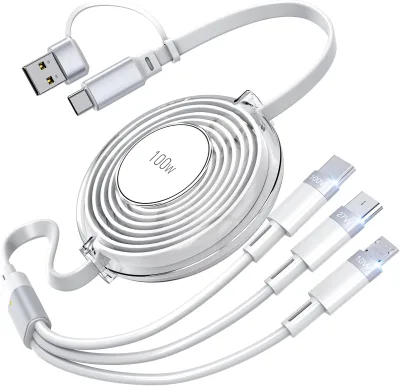
When sourcing a 65W retractable USB-C charger cable, buyers must first navigate the distinction between the power delivery capabilities and the mechanical form factor. The core keyword implies a specific power rating of 65 Watts, which typically requires a USB Power Delivery (PD) protocol implementation capable of handling higher current loads, often necessitating E-Marker chips within the connector to negotiate voltage and amperage safely. However, the provided product data presents a complex matrix of attributes where "retractable" functionality is explicitly noted as "Not Scalable" or "Retractable: Not Scalable" in specific model entries, while other entries list "Multifunctional retractable data cable" as a function. This discrepancy highlights a critical verification step: the term "retractable" in the market often refers to a mechanical housing that retracts the cable, but the data suggests that for certain models, this feature may be absent or the mechanism is not scalable to higher power ratings without specific engineering.
The technical specifications for the cables observed in the market data indicate a variety of connector types, including USB 2.0, Micro-USB, and USB Type-C to Lightning, Micro, and Type-C configurations. The conductor material is consistently listed as Pure Copper or Tinned Copper, which is essential for minimizing resistance and heat generation during high-power charging. The jacket materials are predominantly TPE (Thermoplastic Elastomer) and PVC, with some models featuring a metal case or aluminum alloy components. For a 65W application, the choice of jacket material is vital; TPE generally offers better flexibility and durability than PVC, which can become brittle over time. The single package size for these units is observed to be approximately 20.0 x 12.0 x 3.0 cm, and the single gross weight is around 0.090 kg, though weight varies by length, with 1-meter units weighing approximately 23 grams and 1.5-meter units at 32 grams.
Buyers must verify the specific model number against the power rating. While some listings mention "PD 100W" or "PD 60W" in their function descriptions, the target keyword specifies 65W. The data shows models like "HXBO-S010" and "LGT-Cable1" with varying lengths, specifically 1.2 meters. It is imperative to confirm that the "retractable" mechanism, if present, does not compromise the internal wiring integrity required for 65W power transfer. The shielding status is listed as "Non-Shielded" in the provided facts, which is a significant technical consideration for data transmission speeds of 480Mbps. For high-power charging, non-shielded cables are generally acceptable, but for data-heavy applications, shielding becomes a critical factor to prevent electromagnetic interference.
Compliance, Certification, and Regulatory Standards
Navigating the regulatory landscape is a non-negotiable aspect of sourcing electronic accessories. The supplied facts explicitly list certifications including CE, ROHS, and FCC. These are the baseline requirements for selling in the European Union, ensuring compliance with environmental standards, and the United States, respectively. The CE mark indicates conformity with health, safety, and environmental protection standards for products sold within the European Economic Area. ROHS compliance ensures that the product does not contain specific hazardous materials, which is crucial for environmental regulations globally. The FCC certification is mandatory for electronic devices sold in the United States to ensure they do not cause harmful interference.
However, buyers should not assume that every listed product satisfies all these certifications automatically. The data treats these as observed attributes of specific listings rather than universal guarantees for every SKU. For a 65W charger cable, the presence of an IC Chip is noted in the product attributes. This chip is often required for PD negotiation and safety, and its presence can be a prerequisite for passing FCC and CE tests. The standard listed as "1000 pieces in one carton box" refers to packaging quantity rather than a safety standard, but it indicates the typical bulk packaging unit.
When evaluating suppliers, buyers must request current, valid certificates for the specific model they intend to purchase. The data mentions "Made in China" and "Guangdong, China" as origins, which are major manufacturing hubs. While these regions have robust supply chains, the regulatory compliance of individual factories can vary. Buyers should verify that the supplier can provide the actual test reports corresponding to the CE, ROHS, and FCC claims, rather than relying on the supplier's self-declaration. Additionally, for 65W applications, UL or other regional safety certifications might be required depending on the destination market, which are not explicitly listed in the provided facts but should be a point of inquiry.
Cost Drivers and Pricing Dynamics
The pricing for 65W retractable USB-C cables is influenced by several distinct factors, primarily the complexity of the retractable mechanism, the quality of the internal conductors, and the inclusion of safety chips. The observed price range in the market data spans from $0.10 to $12.25 USD. This wide variance reflects the difference between basic data cables and high-power, feature-rich units. A cable priced at the lower end of this spectrum likely lacks the E-Marker chip required for 65W negotiation or uses lower-grade conductors, while the higher-end pricing correlates with the inclusion of PD 100W capabilities, metal casings, and advanced retractable housings.
The Minimum Order Quantity (MOQ) is another significant cost driver. The observed MOQ range is from 1 to 10,000 units, with a specific high-confidence fact noting an MOQ of 10 pieces for certain models. For buyers seeking to test the market or fulfill small orders, the ability to order low quantities is advantageous. However, for large-scale procurement, negotiating MOQs can significantly impact the unit cost. The data indicates that customization is available, including private molds and customized logos. Customization typically incurs additional tooling costs and higher MOQs, which can affect the overall cost structure.
Material costs also play a pivotal role. The use of pure copper versus tinned copper, and the choice between TPE and PVC jackets, directly impacts the manufacturing cost. The data mentions "Pure Copper" and "Tinned Copper" as conductor options. Pure copper offers superior conductivity but is generally more expensive and heavier. Tinned copper provides better corrosion resistance and is often used in environments with higher humidity. The presence of a metal case or aluminum alloy components, as noted in the product types, adds to the material cost and the final retail price. Buyers should analyze the Bill of Materials (BOM) to understand the cost breakdown and ensure they are paying for the necessary quality components rather than just the brand name.
Typical Applications and Use Cases
The versatility of the 65W retractable USB-C cable is evident in the extensive list of compatible devices provided in the data. These cables are designed for a wide array of applications, including mobile phones, tablets, power banks, smart watches, earphones, and even gaming consoles. The specific mention of "MP3 / MP4 Player, Video Game Player, Camera, Mobile Phone, Computer, Other, for android, Car, IOS, Tablet" underscores the universal nature of these products. The ability to support both charging and data transfer at 480Mbps makes them suitable for syncing data between devices and computers.
For the 65W power rating, the primary application is fast charging of high-capacity devices such as laptops, high-end smartphones, and tablets. The data mentions "PD 27W fast charge, PD 60W fast charge," and "PD 100W," indicating that the technology supports a range of power delivery profiles. A 65W cable is particularly valuable for professionals who need to charge laptops and phones simultaneously or for users who require rapid charging cycles. The retractable feature adds a layer of convenience for users who travel frequently, as it eliminates the need for a separate cable organizer and reduces the risk of tangling.
The "Multifunctional" aspect of the cable, as described in the data, suggests that it may support multiple connector types, such as USB-C to Lightning, Micro-USB, and USB-C to USB-C. This "3 in 1" or "4 in 1" configuration is highly desirable for users who own a mix of devices with different charging ports. The data also notes compatibility with "Car" and "Power Bank" applications, indicating that these cables are robust enough for mobile environments and can serve as a reliable power source for on-the-go charging. The inclusion of a "Wireless Charging" feature for watches in some color variants (Black, White, Pink) further expands the application scope, suggesting an ecosystem of accessories that can be powered by a single cable solution.
Supplier Evaluation and Manufacturing Capabilities
Evaluating suppliers requires a deep dive into their manufacturing capabilities and quality assurance processes. The data indicates that suppliers offer "OEM/ODM" support and "Customized" private molds. This suggests that the manufacturers are capable of producing bespoke solutions, which is a positive indicator of their technical maturity. The presence of a "Brand Name" like "HXBO" and specific model numbers like "TS-135," "TS-127," and "TS-177" implies that these are established product lines rather than generic, unbranded goods.
When assessing a supplier, buyers should verify their production capacity and lead times. The observed delivery time is 7-15 days, which is a standard timeframe for manufacturing and shipping from China. However, this can vary based on order volume and customization requirements. The data mentions "Quantity: 600PCS/CTN," which provides insight into the packaging and logistics efficiency. Suppliers with higher production volumes can often offer better pricing and more consistent quality control.
Buyers should also inquire about the supplier's experience with high-power cables. The distinction between "Non-Shielded" and shielded cables, as well as the use of E-Marker chips, requires specific engineering expertise. A supplier that has successfully produced 65W or 100W cables will have the necessary testing equipment and quality control protocols in place. The fact that the data lists "With IC Chip" as a standard attribute for some models suggests that the suppliers are familiar with the integration of safety and negotiation chips. However, buyers must confirm that the specific supplier they choose has a track record of producing reliable, high-power cables and can provide references or case studies.
Quality Control and Long-Term Procurement Considerations
Ensuring long-term reliability is paramount when sourcing electronic accessories. The data highlights several quality indicators, such as the use of "Pure Copper" conductors and "TPE+PVC" jackets. These materials are chosen for their durability and resistance to wear and tear. However, the mechanical integrity of the retractable mechanism is a potential weak point. The data notes "Retractable: Not Scalable" in some entries, which could imply that the mechanism is not designed for heavy-duty use or that the scalability of the feature is limited. Buyers should request samples to test the retraction mechanism for smoothness and durability over thousands of cycles.
Quality control should also focus on the electrical performance. The data mentions "Data Transmission Function" and "Charging Function" as key attributes. Buyers should verify that the cables meet the specified data transfer speeds of 480Mbps and can consistently deliver 65W of power without overheating. The presence of an "IC Chip" is a positive sign, as it helps regulate power and protect connected devices. However, buyers should insist on third-party testing reports to validate these claims.
For long-term procurement, buyers should consider the scalability of the supply chain. The ability to customize logos and packaging, as noted in the data, allows for brand differentiation. However, buyers must ensure that the customization process does not compromise the quality of the product. The "Private Mold" feature suggests that suppliers can create unique designs, but this requires a significant upfront investment and a longer lead time. Buyers should plan their procurement strategy to account for these timelines and ensure that the supplier can maintain consistent quality across different production batches.
In conclusion, sourcing a 65W retractable USB-C charger cable requires a careful balance of technical verification, compliance checks, and supplier evaluation. By focusing on the specific attributes provided in the market data and conducting thorough due diligence, buyers can identify suppliers that offer high-quality, reliable products that meet their specific needs. The wide range of applications and the availability of customization options make these cables a versatile choice for various markets, but the complexity of the retractable mechanism and the high-power requirements demand a strategic approach to procurement.
FAQs
Can this cable support 65W fast charging?
Yes, the cable supports fast charging with PD capabilities up to 100W in specific models. It includes IC chips for safe negotiation and handles data transfer at 480Mbps for compatible devices.
What certifications does the cable have?
The product carries CE, ROHS, and FCC certifications for global compliance. These marks ensure safety and environmental standards are met for markets in Europe and the United States.
Which connector types are available for this cable?
Available connectors include USB 2.0, Micro-USB, and USB Type-C to Lightning and Type-C. The 3-in-1 design allows charging for Android, iOS, and other devices simultaneously.
How long is the standard cable length?
The standard cable length is 1.2 meters, with some variants offering 1 meter or 1.5 meters. Weight varies by length, with 1-meter units weighing approximately 23 grams per piece.
What is the minimum order quantity for this product?
The minimum order quantity is 10 pieces for standard models, though ranges can extend up to 10,000 units. Customization options may require higher quantities depending on the specific mold needs.
Can I request a customized logo on the cable?
Yes, customized logos are accepted as part of the OEM and ODM support services. Private molds are also available for buyers seeking unique branding and specific product configurations.
What materials are used for the cable jacket?
The jacket is made from TPE and PVC materials for durability and flexibility. Some models feature a metal case or aluminum alloy components for enhanced protection and heat dissipation.